



 By Flow Prod
  May 28, 2026
 Pneumatic Systems > Pneumatic Systems FAQ
Why Is My Pneumatic Actuator Drifting or Slow Moving?
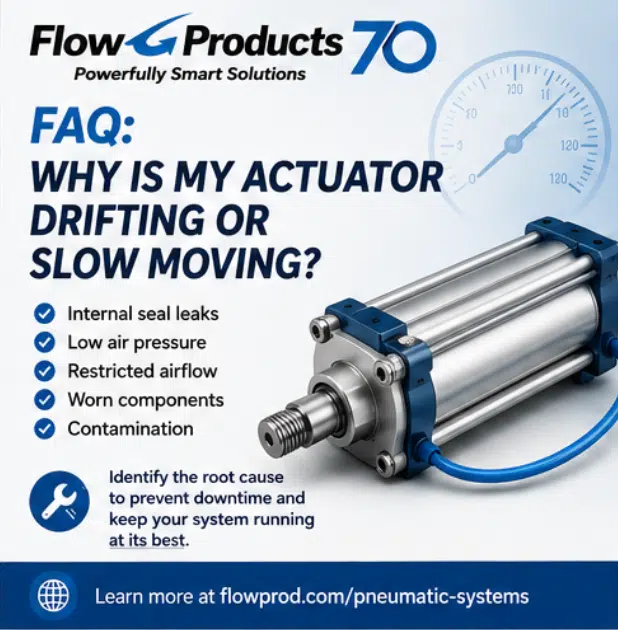
Pneumatic actuator drift or slow movement is often caused by internal seal leaks, low incoming air pressure, restricted airflow, worn components, or contamination in the compressed air system.
Common Causes of Pneumatic Actuator Drift
When a pneumatic actuator drifts, moves slowly, or fails to hold position, the issue usually points to a loss of air pressure, leakage, or restriction within the system. A properly functioning actuator should move consistently and hold its position based on the application requirements.
One of the most common causes is internal cylinder seal leakage. As seals wear, compressed air can bypass the piston instead of maintaining force. This can cause the actuator to creep, drift, or lose holding power.
- Internal piston seal leakage
- Low incoming air pressure
- Restricted tubing or undersized air lines
- Clogged filters or poor air preparation
- Sticky or worn control valves
- Incorrectly adjusted flow controls
- Excessive side load or mechanical binding
- Moisture, dirt, or oil contamination
Why Slow Movement Happens
Slow actuator movement is usually caused by limited airflow. Even if system pressure appears correct at rest, the actuator may not receive enough air volume during operation. This can happen when valves, tubing, fittings, or filters are undersized or partially blocked.
Flow controls should also be inspected. If they are adjusted too tightly, installed incorrectly, or contaminated, they can restrict actuator speed.
How to Troubleshoot the Problem
- Check incoming air pressure at the point of use.
- Inspect the actuator and fittings for external leaks.
- Verify that tubing, valves, and fittings are properly sized.
- Inspect filters and regulators for restrictions.
- Check the valve for sticking, contamination, or seal wear.
- Test whether the actuator has internal bypass leakage.
- Look for mechanical binding or side loading.
Preventing Future Actuator Problems
Routine maintenance, clean compressed air, proper filtration, correct valve sizing, and correctly sized actuators all help reduce actuator drift and slow operation. If actuator performance continues to decline, replacement or system redesign may be required.
For additional help, visit our Pneumatic Systems page or review our guide on how to size pneumatic actuators and valves.
Need Help Troubleshooting a Pneumatic Actuator?
Flow Products helps manufacturers, OEMs, and maintenance teams diagnose actuator drift, slow movement, valve issues, and compressed air performance problems.