



 By Flow Prod
  May 28, 2026
 Pneumatic Systems > Pneumatic Systems FAQ
How Do I Lower Air Consumption in a Pneumatic System?
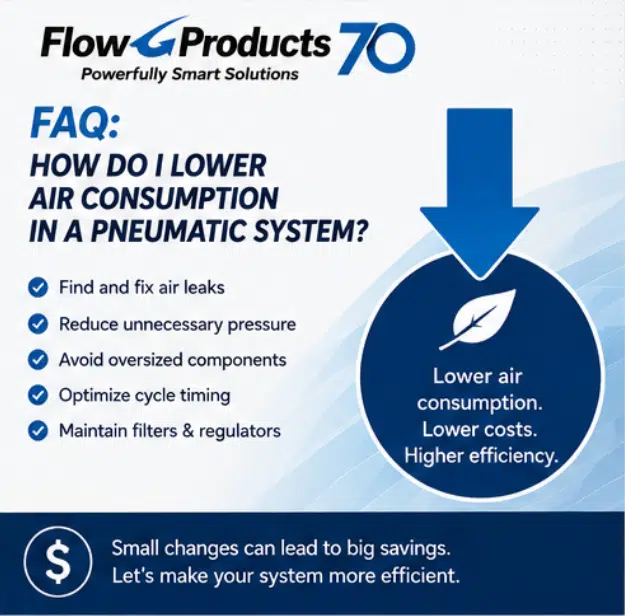
To lower air consumption in a pneumatic system, inspect for leaks, reduce unnecessary operating pressure, avoid oversized components, optimize cycle timing, and use properly sized valves, actuators, and air preparation equipment.
Why Reducing Air Consumption Matters
Compressed air is one of the most expensive utilities in many industrial facilities. Even small leaks, oversized components, or unnecessarily high pressure settings can create significant long-term operating costs.
Reducing air consumption can improve efficiency, lower energy costs, reduce compressor load, and extend the life of pneumatic components.
Start With Air Leak Detection
Air leaks are one of the most common sources of wasted compressed air. Leaks may occur at fittings, tubing, valves, cylinders, FRL assemblies, manifolds, quick disconnects, and worn seals.
Routine leak inspections can help identify unnecessary air loss before it becomes a major operating expense.
Reduce Unnecessary Operating Pressure
Many pneumatic systems operate at higher pressure than the application actually requires. Lowering pressure to the correct level can reduce air consumption while still maintaining the force and speed needed for the process.
However, pressure should never be reduced without confirming that actuators, valves, and machine functions still meet performance and safety requirements.
Avoid Oversized Pneumatic Components
Oversized cylinders, valves, and tubing can waste compressed air. Proper sizing helps ensure the system delivers enough performance without using more air than necessary.
For sizing guidance, visit our related article: How Do I Size Pneumatic Actuators and Valves?
Ways to Lower Pneumatic Air Consumption
- Repair leaks throughout the system
- Use the lowest effective operating pressure
- Properly size actuators and valves
- Optimize cycle timing
- Use flow controls correctly
- Replace worn seals and fittings
- Maintain filters, regulators, and dryers
- Reduce unnecessary blow-off air
- Shut off idle equipment when not in use
- Review compressor and receiver capacity
Improve Efficiency With Better System Design
A well-designed pneumatic system balances force, speed, airflow, pressure, and component sizing. Flow Products helps customers identify ways to reduce air waste while maintaining reliable machine performance.
Explore more at Pneumatic Systems or browse our pneumatic products.
Need Help Reducing Compressed Air Costs?
Flow Products can help evaluate your pneumatic system and recommend efficient valves, actuators, regulators, filters, and air preparation components to reduce air consumption and improve reliability.